ISIVC'2026 Program
Keynote Speakers
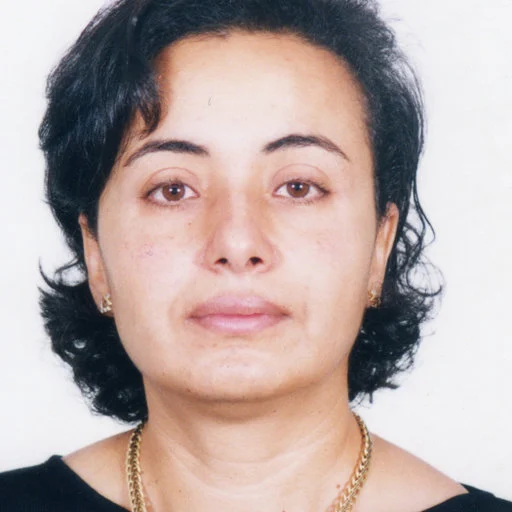
Sofia Ben Jebara
Sup’Com, Tunisia
Talk Title: Analysis of Physiological Signals for Cognitive Load Assessment: from Acquisition to Classification
Sofia Ben Jebara is a teacher-researcher at higher school of communication (SUP’COM) from Carthage university in Tunis-Tunisia, holding the position of professor within the mathematics, signals, and communications department since 2009. She received the ‘habilitation universitaire’ (french system) from the same institution in 2004 and engineering, master and Ph.D degrees in electrical engineering from national school of engineering of Tunis (ENIT) in 1990, 1991 and 1998 respectively. Her research primarily focuses on adaptive filtering, speech denoising, pathological voice analysis and enhancement, emotion detection from speech, physiological signals processing. She has designed and delivered a wide range of courses, including signal processing, speech and audio processing, intelligent multimedia processing, data mining, machine learning and artificial intelligence. She has held responsibilities such as director of the doctoral studies in information and communication technologies, master in telecommunication coordinator and founding member/head of research unit in high-speed ccommunications techniques and audio processing (TECHTRA) at SUP'COM. She has demonstrated a strong commitment by actively and regularly participating in telecommunication engineering study program reform. She has leveraged her leadership role to establish a quality approach to that aims continuous improvement, international labeling, and certification of SUP’COM.
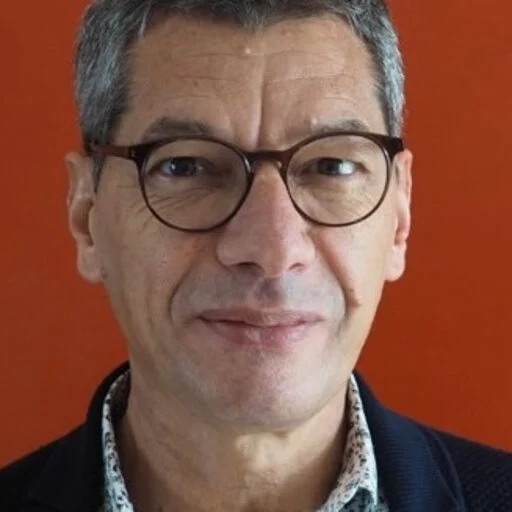
El Mustapha Mouaddib
University of Picardie Jules Verne, France
Talk Title: Numérisation 3D et complétude. Application au patrimoine
Professor El Mustapha Mouaddib is a Full Professor at the University of Picardie Jules Verne (France) and the Director of the Federative Research Structure “Digital and Heritage”, which he established in 2016 to promote interdisciplinary research between digital sciences and cultural heritage preservation. His research focuses on omnidirectional vision, 3D vision, visual servoing, and the application of digital technologies to the mapping and study of architectural heritage. Since 2010, he has led the E-Cathédrale program, dedicated to the digital modeling of historical monuments for conservation and restoration purposes.
Professor Mouaddib serves as the Coordinator of the “Digital” Working Group of the CNRS GDR MAESTRO, and he contributed to the scientific restoration project of Notre-Dame de Paris Cathedral, where he participated in assessing the monument’s condition after the 2019 fire through advanced numerical modeling. His international academic career includes appointments as Visiting Professor at the University of Osaka (Japan) in 2004, Inria Rennes (France)in 2010–2011, and the Queensland University of Technology (QUT), Brisbane (Australia) in 2018.
He has supervised or co-supervised more than thirty Ph.D. theses and authored or co-authored over 130 scientific publications, including 36 journal papers and 99 international conference communications. Beyond academia, Professor Mouaddib actively promotes scientific outreach and heritage awareness, exemplified by the production of a digital capsule dedicated to the Hassan Mosque of Rabat, showcasing his commitment to bridging science, culture, and innovation.
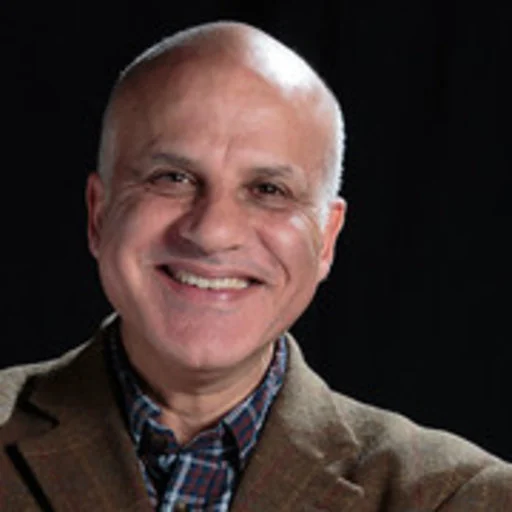
Mohamed Daoudi
IMT Nord Europe, France
Teaching Machines to Understand People: Faces, Bodies, Interactions, and Mental Health
Mohamed DAOUDI is a Full Professor of Computer Science at IMT Nord Europe and the Head of Image group at CRIStAL Laboratory (UMR CNRS 9189). His research interests include computer vision and machine learning for human behavior understanding. He has published over 150 papers in some of the most distinguished scientific journals and international conferences. He is/was Associate Editor of Image and Vision Computing, IEEE Transactions on Multimedia, IEEE Trans. on Affective Computing and Computer Vision and Image Understanding, Computers & Graphics, Guest Editor for Computer Vision and Image Understanding Special Issue on “Special Issue-Eyes on People Recent Trends on Human Analysis, Perception and Generation-CVIU”, Guest Editor for Image and Vision Computing On “Learning with Manifolds in Computer Vision”, Guest Editor for Sensors “Computer Vision in Human Analysis: From Face and Body to Clothes”, and Guest Editor for IEEE Transactions on Biometrics, Behavior and Identity Science on “Selected Best Works From Automated Face and Gesture Recognition 2019”. He was General Chair of IEEE International Conference on Automatic Face and Gesture Recognition IEEE FG 2019 and IEEE FG 2025, 3D Object Retrieval Symposium (2010, 2022, 2023), Shape Modeling International Conference (2015), has organized successful workshops in Face and Gesture Analysis for Health Informatics (FGAHI at CVPR 2023, ICMI 2020, CVPR 2019, FG 2018), Learning with few or without annotated face, body and gesture data (LFA at WACV 2023, IEEE FG 2024), Generation of Human Face and Body Behavior (GHB at WACV 2021, ICIAP 2023), Towards a Complete Analysis of People: From Face and Body to Clothes (T-CAP at ICIAP 2022, ICPR 2022, ECCV 2022), Manifold Learning, From Euclid to Riemann (ManLearn at ICPR 2021, ICCV 2017), and has served as area chair at 3DV 2021, IEEE FG 2024, ACM Multimedia (2021, 2022, 2023, 2024), EUSIPCO (2013, 2015). He is IAPR Fellow, a IEEE senior member, an ACM member, and a member of the European Laboratory for Learning and Intelligent Systems (ELLIS). Professor DAOUDI has graduated 30 doctoral and served on numerous other graduate student committees. Many of his students have gone on to successful in careers in industry, academia.
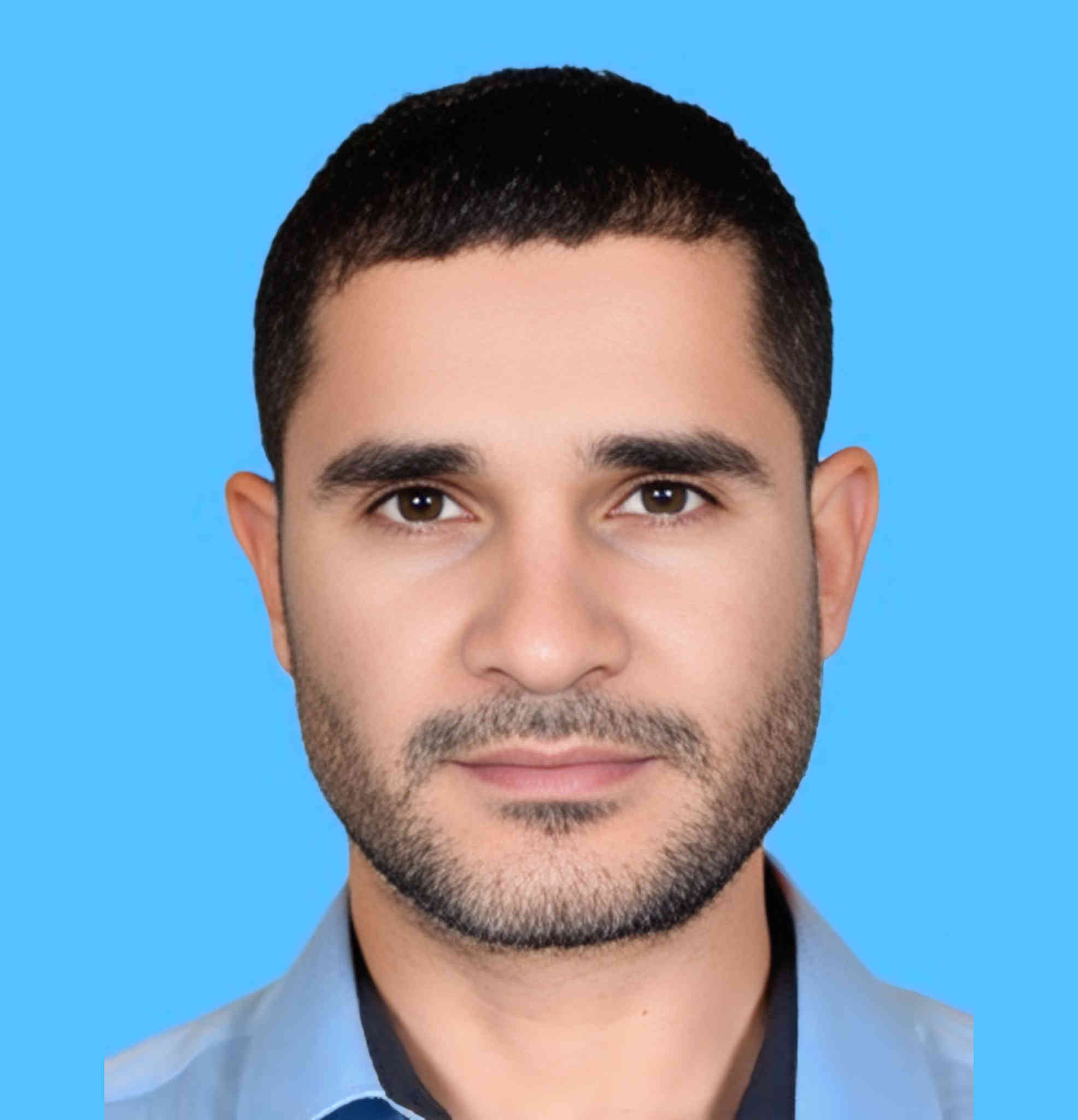
Rachid Saadane
Hassania School of Public Works, Morocco
Talk Title: Toward 6G Networks: Vision, Enabling Technologies, Key Challenges, and Future Research Directions
Rachid Saadane holds a B.Sc. (2001) and an M.S. (2003) from Mohammed V University, as well as a Ph.D. (2007) from the University of Mohamed V in collaboration with the Eurecom Institute, a graduate school and research center in digital science. He is currently a full professor in the Department of Electrical Engineering at the Hassania School of Public Works (HSPW or EHTP). From March 2003 to July 2006, he worked at the Eurecom Institute in France as a research engineer, focusing on the development of a framework for Radio Frequency channel modeling.
His research interests encompass a wide range of areas, including Wireless Communications, Big Data, Software Engineering, Signal and Image Processing and applications, Smart Cities and applications, IoT, IIoT, Society 5.0, Artificial Intelligence, Smart and Precise Agriculture, Green Hydrogen, Artificial Intelligence and Economy, and Wireless Sensor Networks. He is also a 5G ICT instructor, contributing to the advancement of modern communication technologies. In addition, he has made significant contributions to the reliability of UWB Communication Systems and has expanded his research to include renewable energies and their applications in sustainable technologies.
Rachid Saadane was honored with the SCA'19 Award for the best paper at the Smart Cities Applications Conference in 2019. He has authored and co-authored over 200 publications and completed over 500 verified peer reviews, reflecting his active involvement in academia, as evidenced by his profile on Web of Science. He also serves as the Head of the LaGeS laboratory at HSPW, a position he has held since 2018. Currently, he is the Deputy Director in charge of research, cooperation, and partnerships at HSPW, where he continues to drive innovation in renewable energy systems and their applications across various sectors.
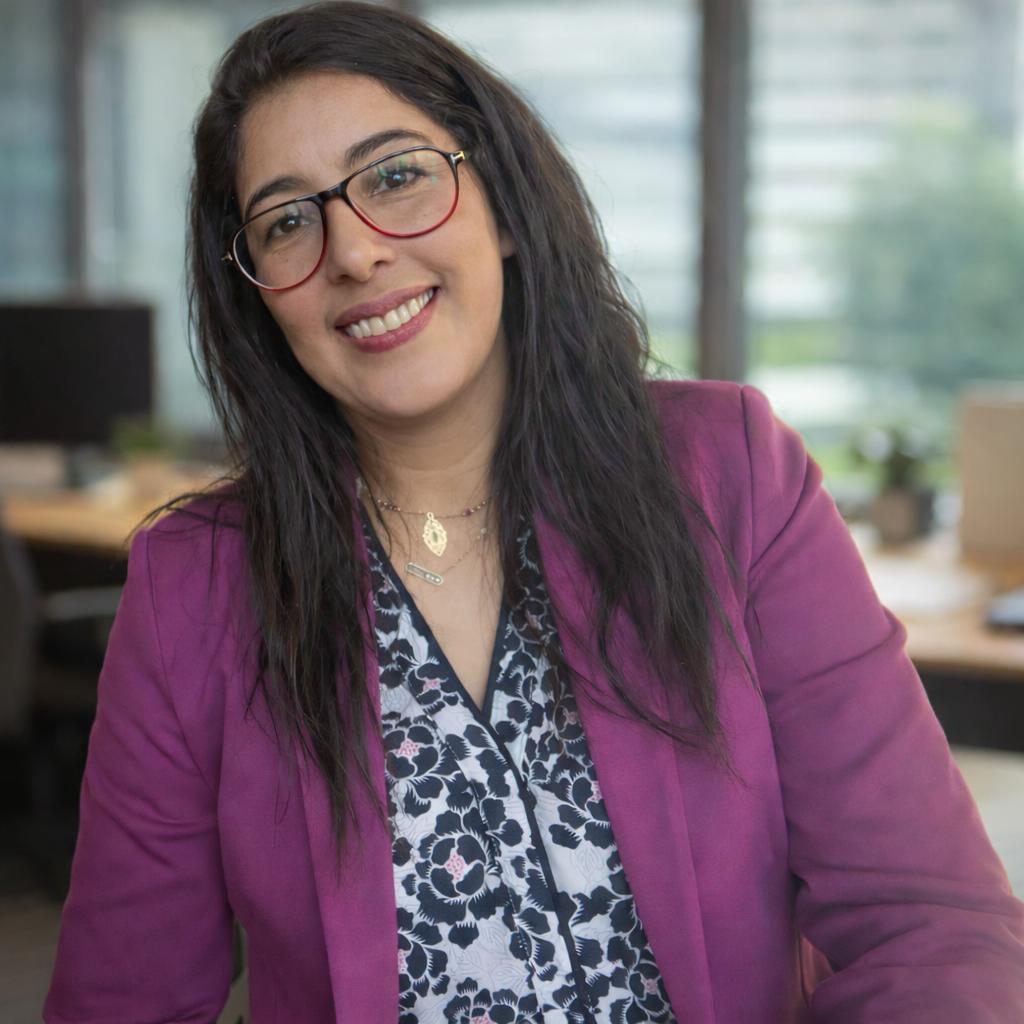
Aouatif Amine
ENSA Kénitra, Morocco
Applications of AI in neurology: from data analysis to clinical collaboration
Prof. Aouatif Amine is a Professor of Computer Science at the National School of Applied Sciences (ENSA) of Kenitra, Ibn Tofail University. A specialist in artificial intelligence, computer vision, and machine learning, she develops innovative solutions for road safety, healthcare, and smart agriculture.
Holder of a PhD in Computer Science, she has authored numerous scientific publications and conducted research stays abroad, including at UQAM (Canada), INSA Rouen (France), and the Johann Radon Institute (Austria).
She has contributed to several national projects, such as: Facial recognition-based access control (IAM, 2005), Osteoporosis detection (Rabat Faculty of Medicine, 2009), SAFEROAD meta-platform for road safety (CNRST-NARSA, 2017), SCAISAR smart greenhouse (OCP-UM6P, 2023).
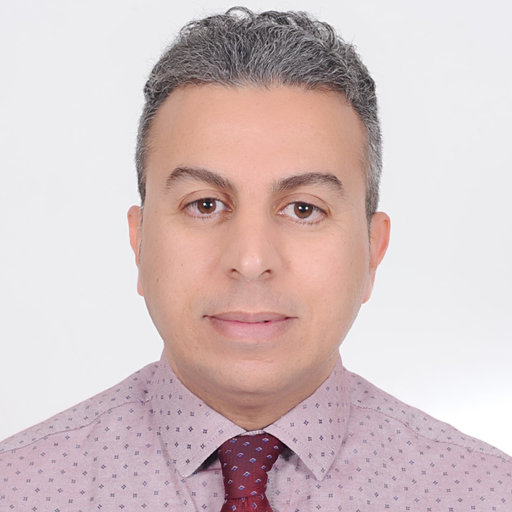
Adnane Addaim
Mohammadia School of Engineering (EMI), Morocco
Design, launch, and operation of two university-developed nanosatellites for research in signal and image processing
Adnane ADDAIM received his master’s degree in 2001 and his Ph.D. in applied sciences in 2008, both in the field of space technology at the Mohammadia School of Engineering (EMI). From 2001 to 2003, he worked at SIEMENS AG as a transmission and networks engineer, responsible for implementing the supervision network for Meditelecom’s GSM transmission network in southern and northern Morocco. From 2004 to 2009, he served as a research engineer at the Center for Space Research and Studies (CRES, EMI), where he worked on research projects focused on the design of academic microsatellites. He received the first prize for the best doctoral thesis presented in the field of science and technology at Mohammed V University between 2007 and 2009. From March to August 2010, he held a postdoctoral fellowship in Italy at the Satellite Communication and Networks Laboratory (SCNL) of the Faculty of Engineering at the University of Genoa. From 2010 to 2020, he was a professor at the ENSA engineering school in Kenitra. He is currently a professor at the Mohammadia School of Engineering and a member of the University Center for Research in Space Technologies (CURTS), which is currently operating two 3U nanosatellites: UM5SAT-Ribat and UM5-EOSAT, launched on August 16, 2024.